How Much Does a Tanjore Painting Cost?
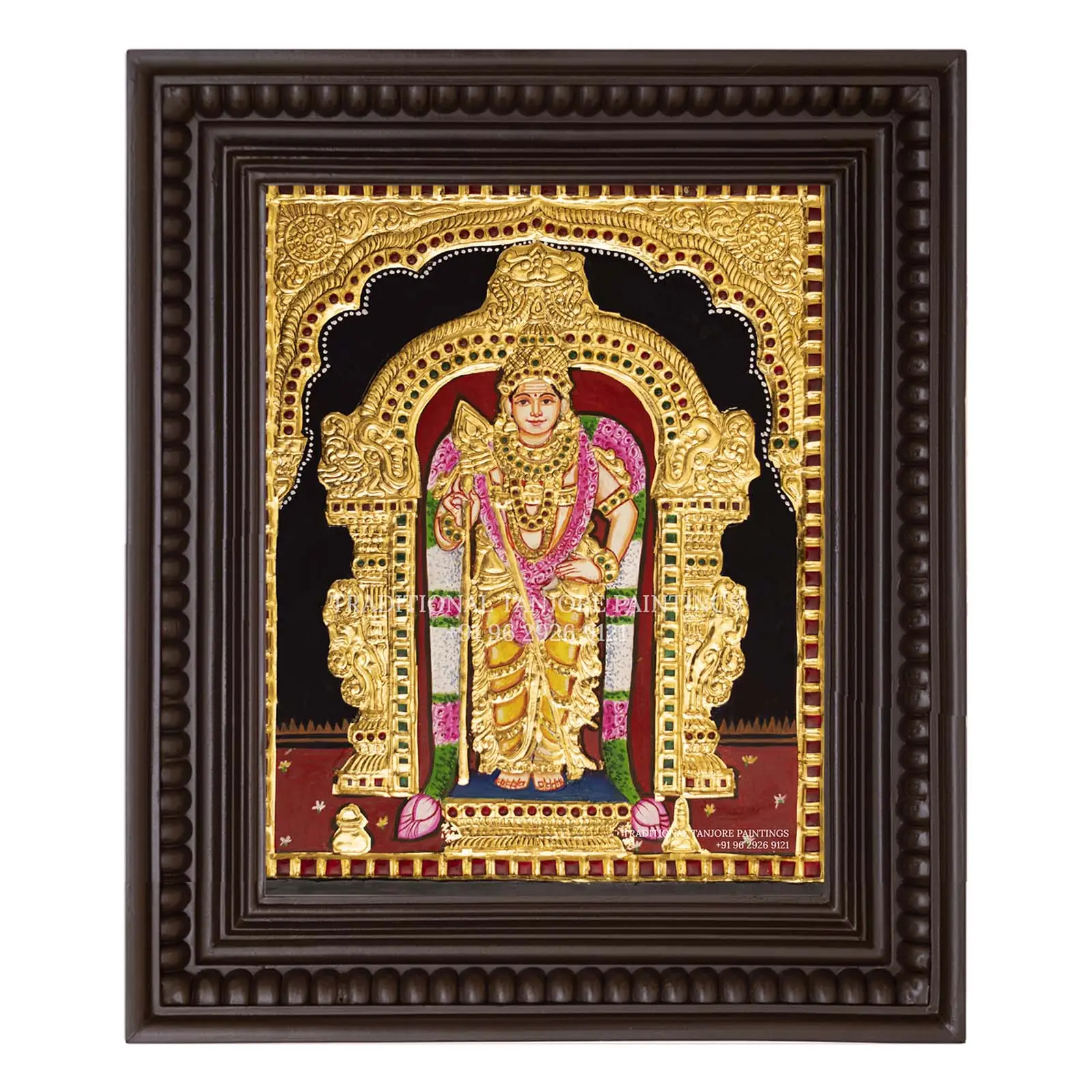
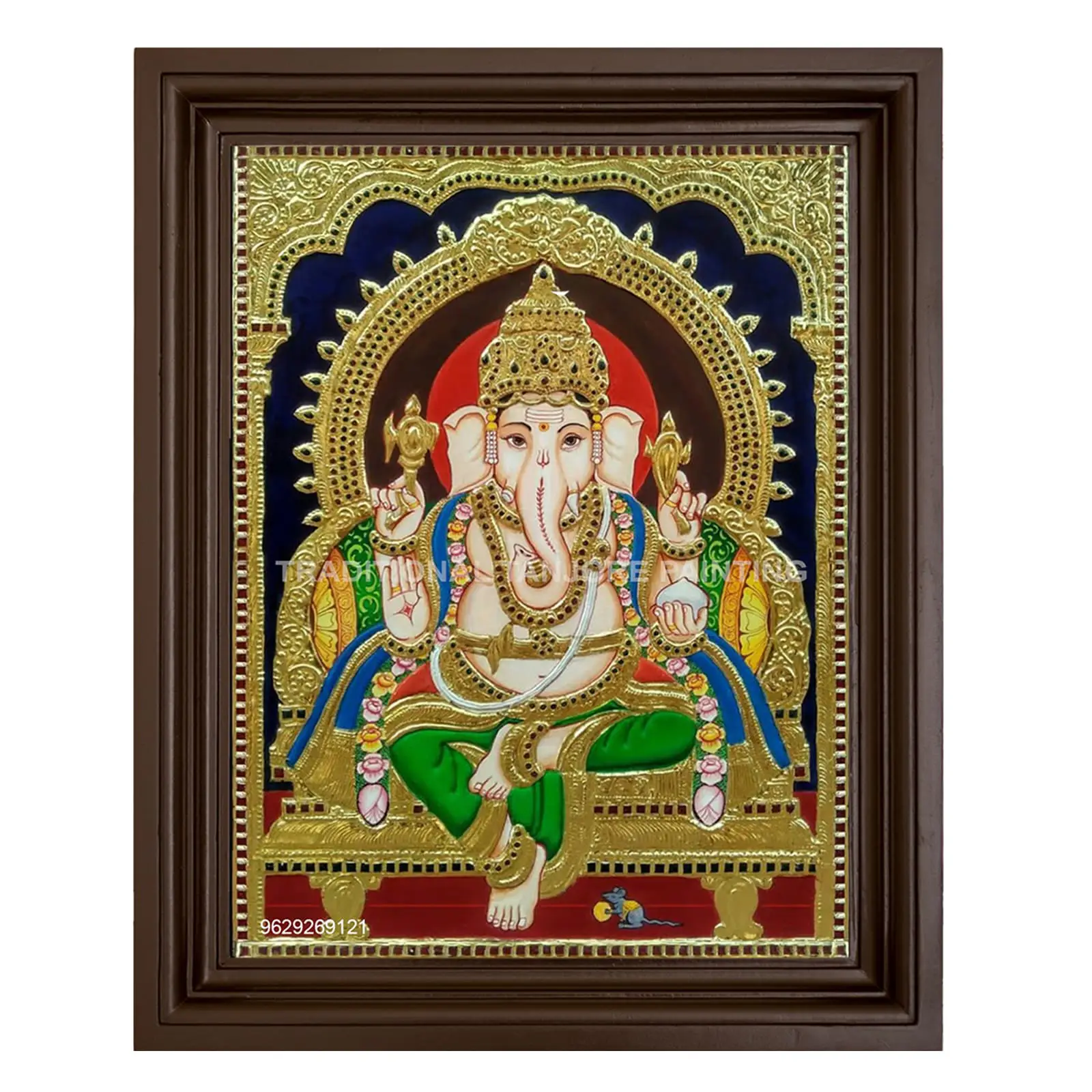
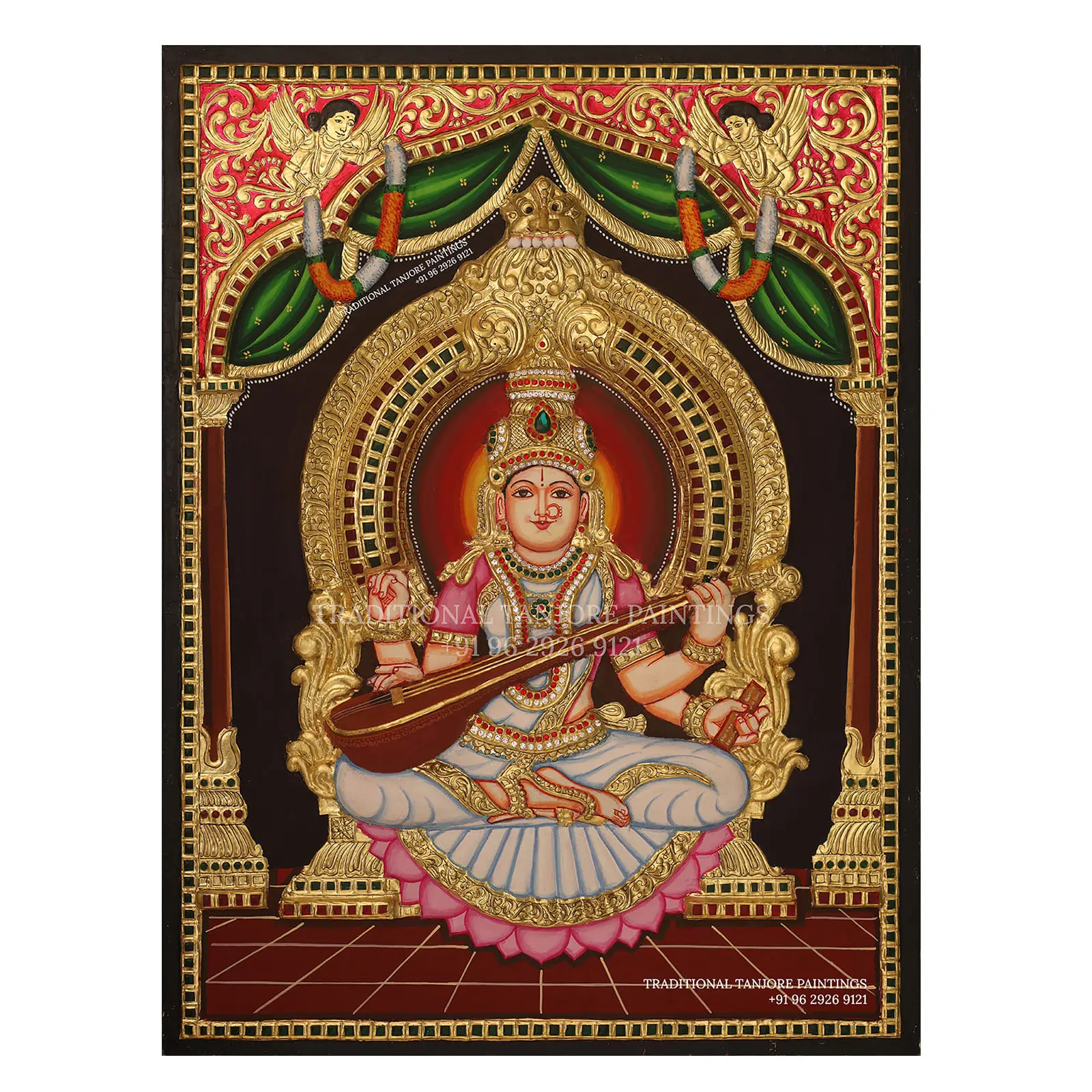
Tanjore painting, also known as Thanjavur painting, is one of India’s most treasured traditional art forms. Known for its rich colors, raised emboss work, and glowing gold foil, this art is valued not only for beauty but also for cultural and spiritual significance. Many buyers often ask how much does a Tanjore painting cost before making a purchase.
The cost of a Tanjore painting varies depending on several important factors. Understanding these factors helps buyers make informed decisions and identify genuine artwork.
Average Cost of a Tanjore Painting
The price of a Tanjore painting generally starts from a few thousand rupees and can go up to several lakhs for premium pieces. On average:
- Small Tanjore paintings (6×8, 8×10 inches): ₹3,000 – ₹8,000
- Medium-sized paintings (12×15, 12×18 inches): ₹8,000 – ₹25,000
- Large Tanjore paintings (18×24 inches and above): ₹25,000 – ₹1,00,000+
The price increases with size, detailing, and material quality.
Factors That Decide How Much a Tanjore Painting Costs
1. Use of Gold Foil
One of the biggest factors affecting cost is gold foil. Authentic Tanjore paintings use 22-carat gold foil, which significantly increases the price. Paintings made with imitation gold sheets are cheaper but do not retain long-term value.
The more gold work involved—crowns, jewellery, arches—the higher the cost.
2. Size of the Painting
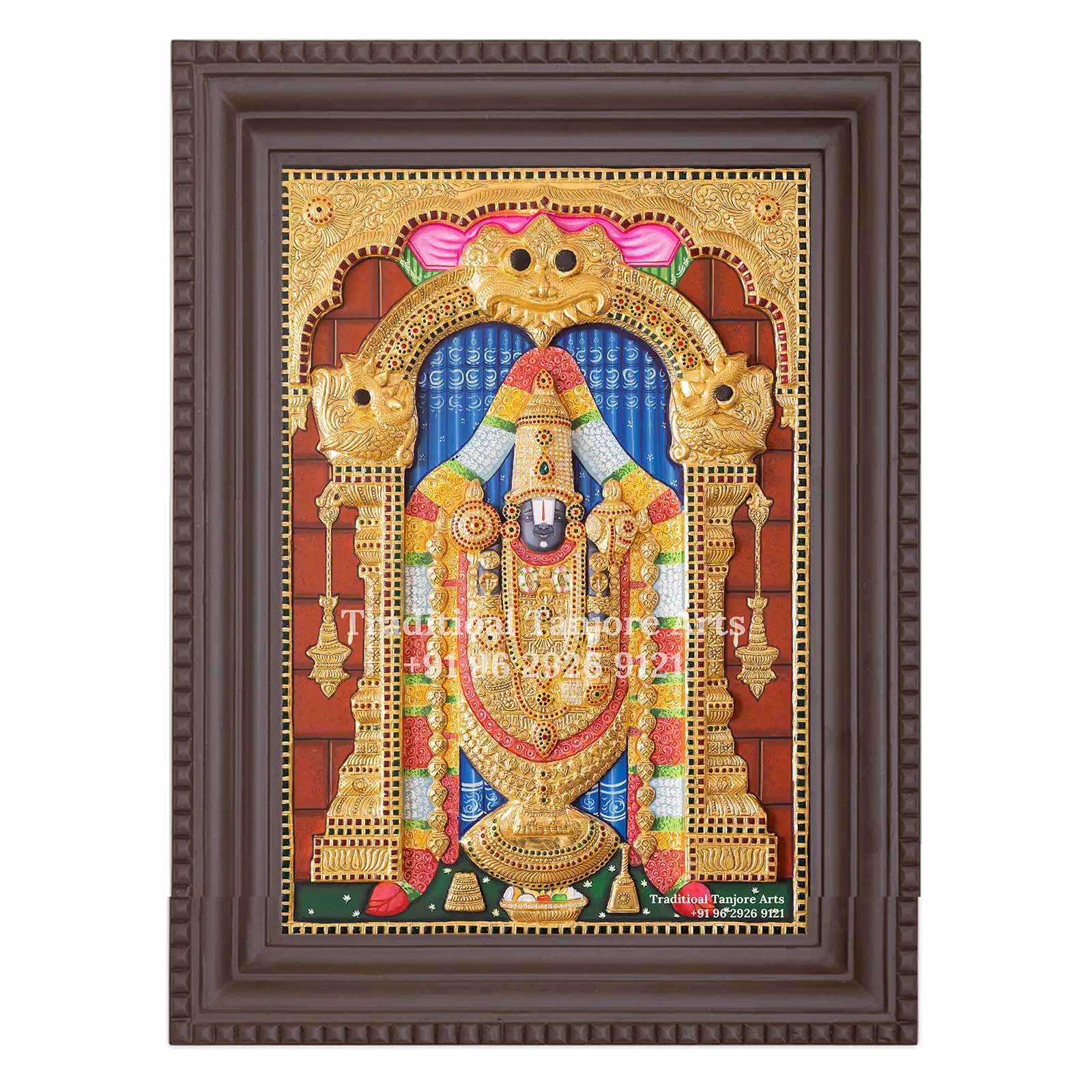
Larger paintings require more materials, gold foil, and time. A big Balaji or Ashta Lakshmi painting can take weeks to complete, which directly impacts pricing.
3. Level of Detailing and Emboss Work
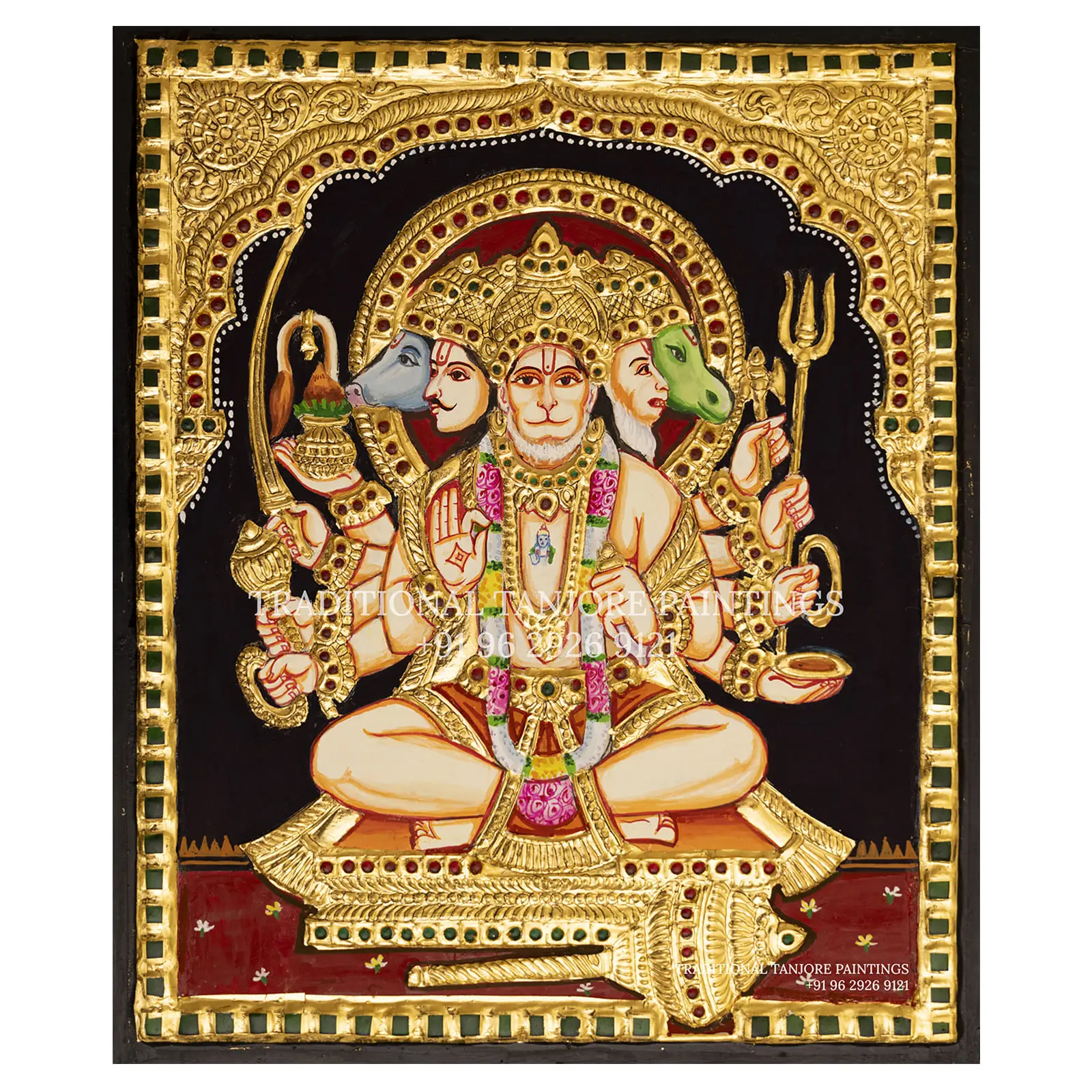
Paintings with heavy emboss work, intricate jewellery, and fine facial detailing cost more than simple designs. Raised relief work requires skill and patience, making such paintings more valuable.
4. Subject and Theme
Certain themes are priced higher due to complexity and demand. Popular subjects include:
- Balaji
- Ashta Lakshmi
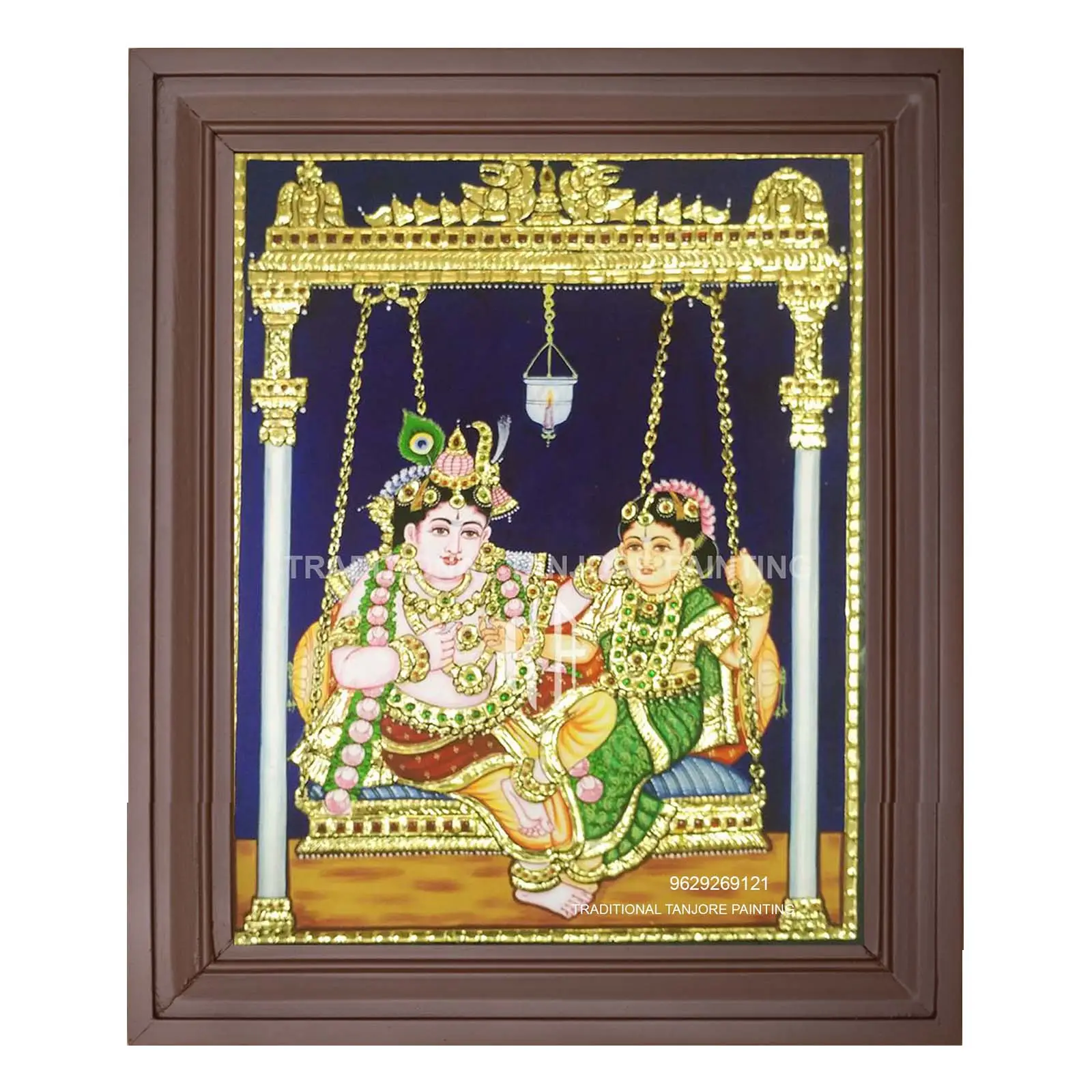
- Krishna
- Shiva Parivar
These require more detailing and gold usage compared to smaller deity portraits.
5. Artist Experience and Authenticity
Paintings created by experienced traditional artists or families practicing Tanjore art for generations usually cost more. Their work quality, proportion accuracy, and finishing justify the higher price.
Authentic handmade paintings are always costlier than machine-made prints or replicas.
6. Wooden Base and Framing
A genuine Tanjore painting is made on a solid wooden board and framed using traditional wooden frames. High-quality wood and framing add to durability and cost.
Why Cheap Tanjore Paintings Can Be Misleading
If you see a Tanjore painting priced extremely low, it is likely not authentic. Such paintings may use:
- Artificial gold sheets
- Printed images with pasted gold
- Poor-quality boards
- Minimal handwork
While they may look attractive initially, they do not last long and lose value over time.
Is a Tanjore Painting Worth the Cost?
Yes, an authentic Tanjore painting is worth the investment. It is not just wall decor but a cultural asset that lasts for generations. Many families treat Tanjore paintings as heirlooms passed down over time.
Apart from artistic value, these paintings hold spiritual significance and are believed to bring peace, prosperity, and positive energy into homes.
Cost of Tanjore Painting for Home vs Gifting
- For home decor: Medium to large paintings are preferred, costing ₹10,000 to ₹40,000
- For gifting: Smaller paintings between ₹3,000 and ₹10,000 are popular for housewarming and festive occasions
The cost depends on how personalized and detailed the painting is.
How to Choose the Right Tanjore Painting for Your Budget
To choose wisely:
- Decide your budget first
- Check gold foil authenticity
- Inspect emboss work quality
- Confirm handmade certification
- Buy from trusted traditional art sellers
This ensures you get true value for your money.
Final Thoughts on Tanjore Painting Cost
So, how much does a Tanjore painting cost? The answer depends on size, gold content, detailing, and craftsmanship. While prices vary, investing in an authentic Tanjore painting means owning a timeless piece of Indian heritage.
A genuine Tanjore painting is not an expense—it is an investment in art, culture, and tradition.