Types of Gems in Tanjore Paintings
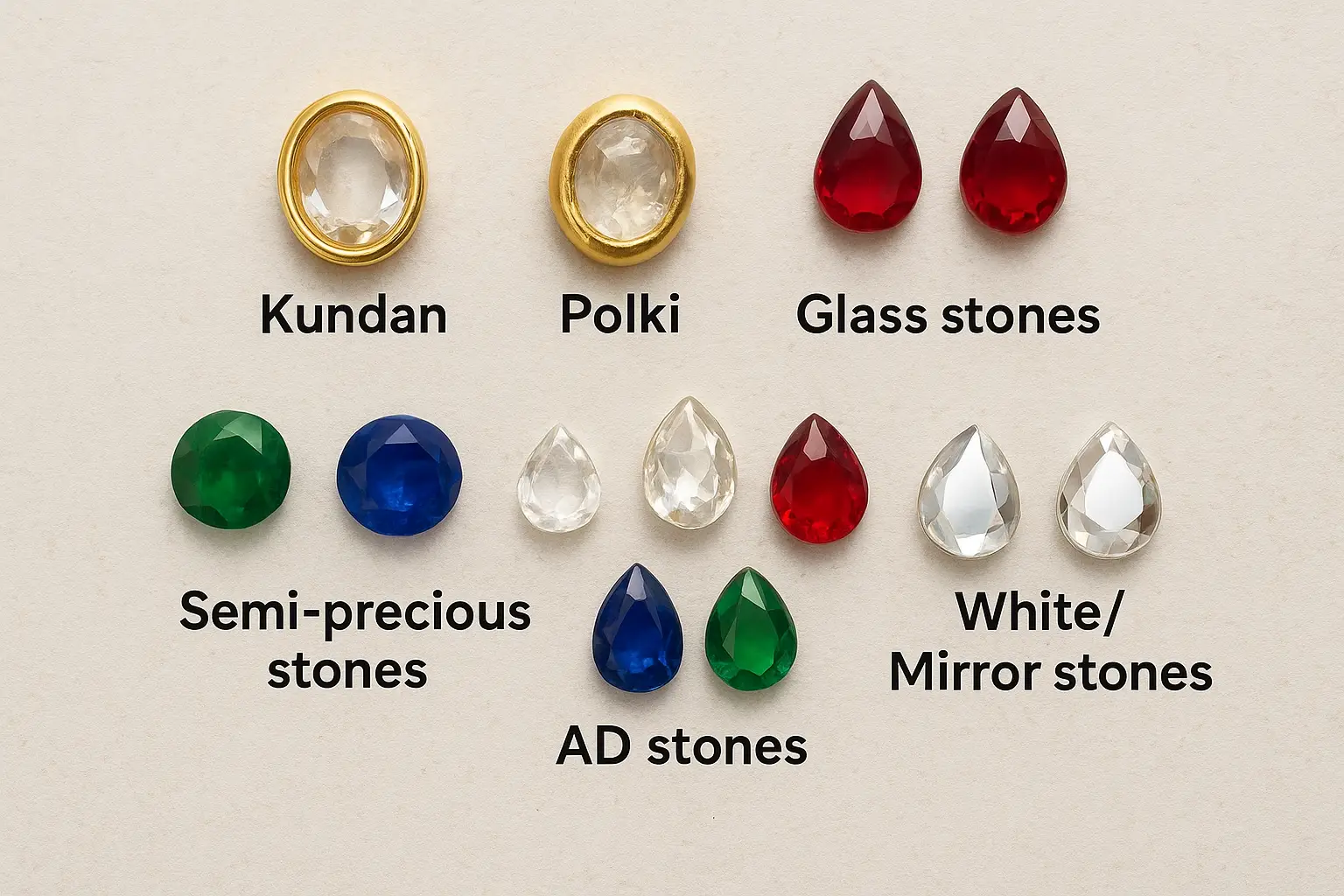
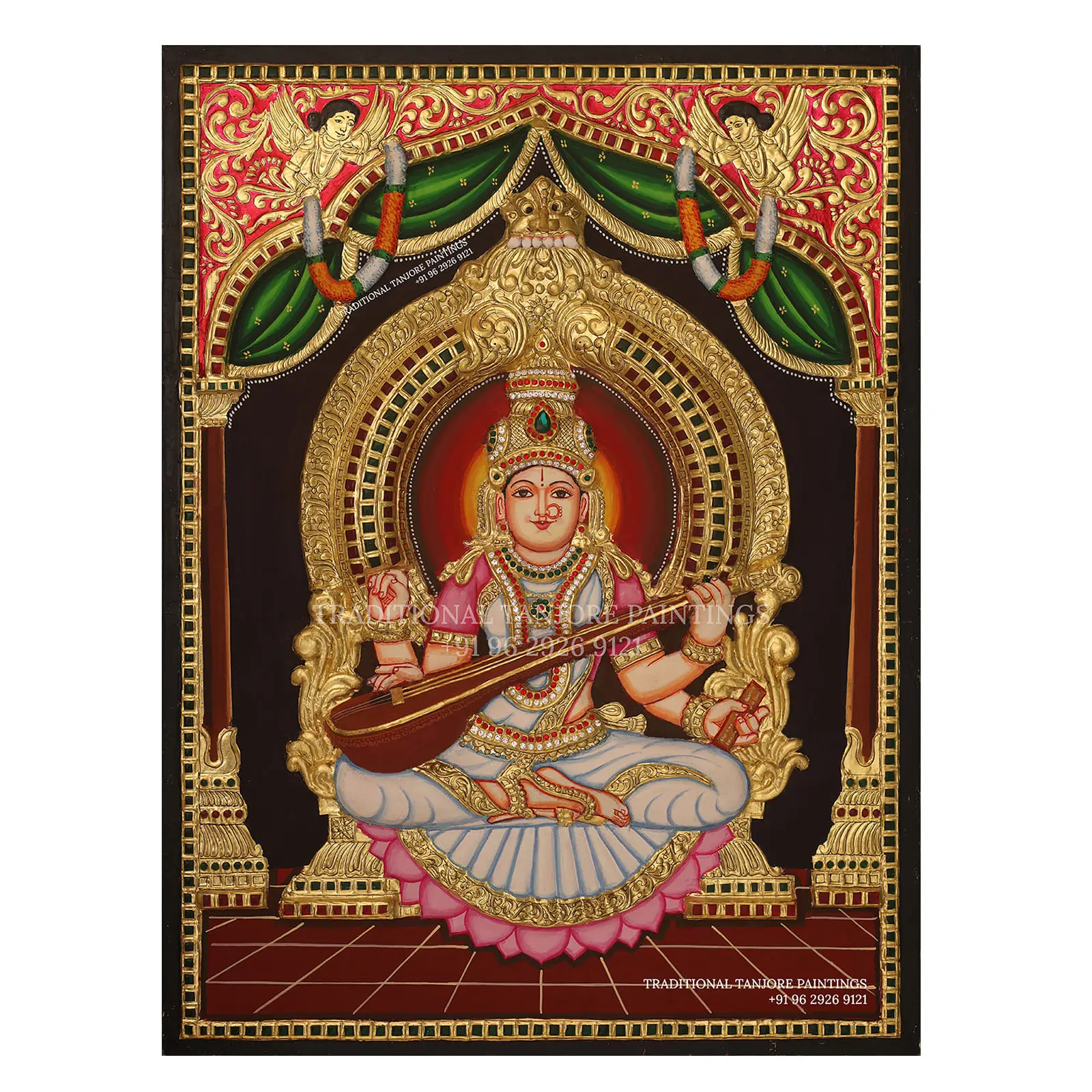
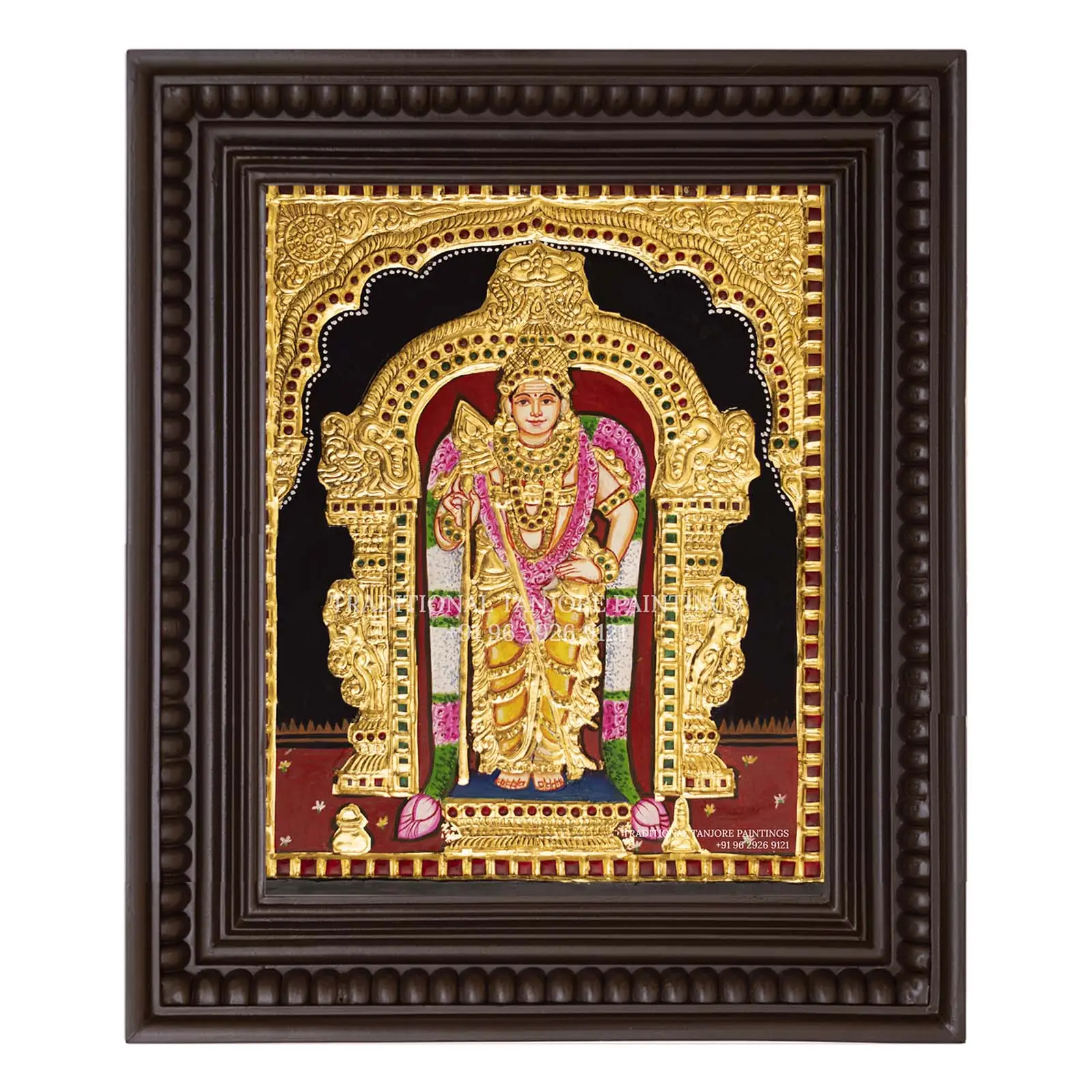
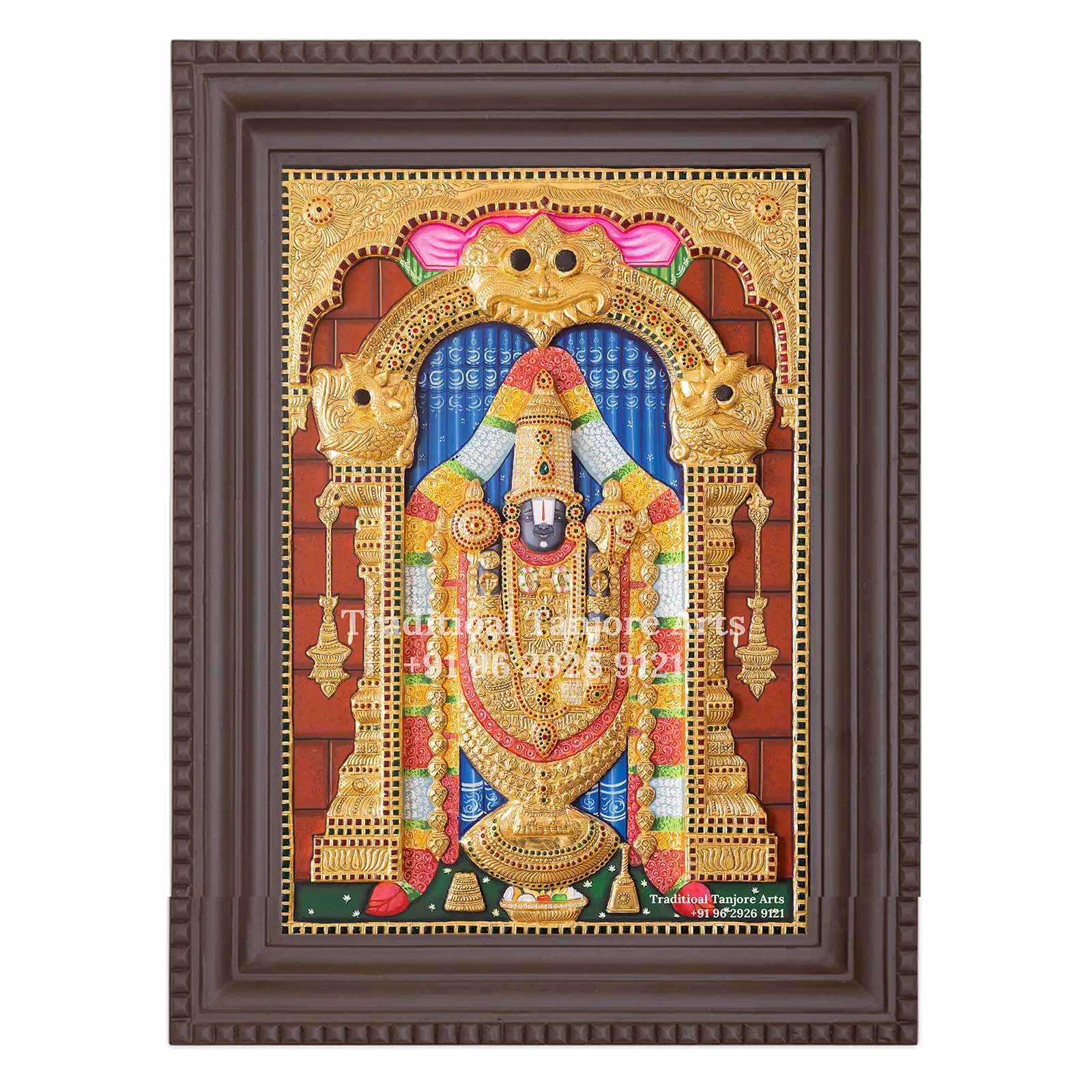
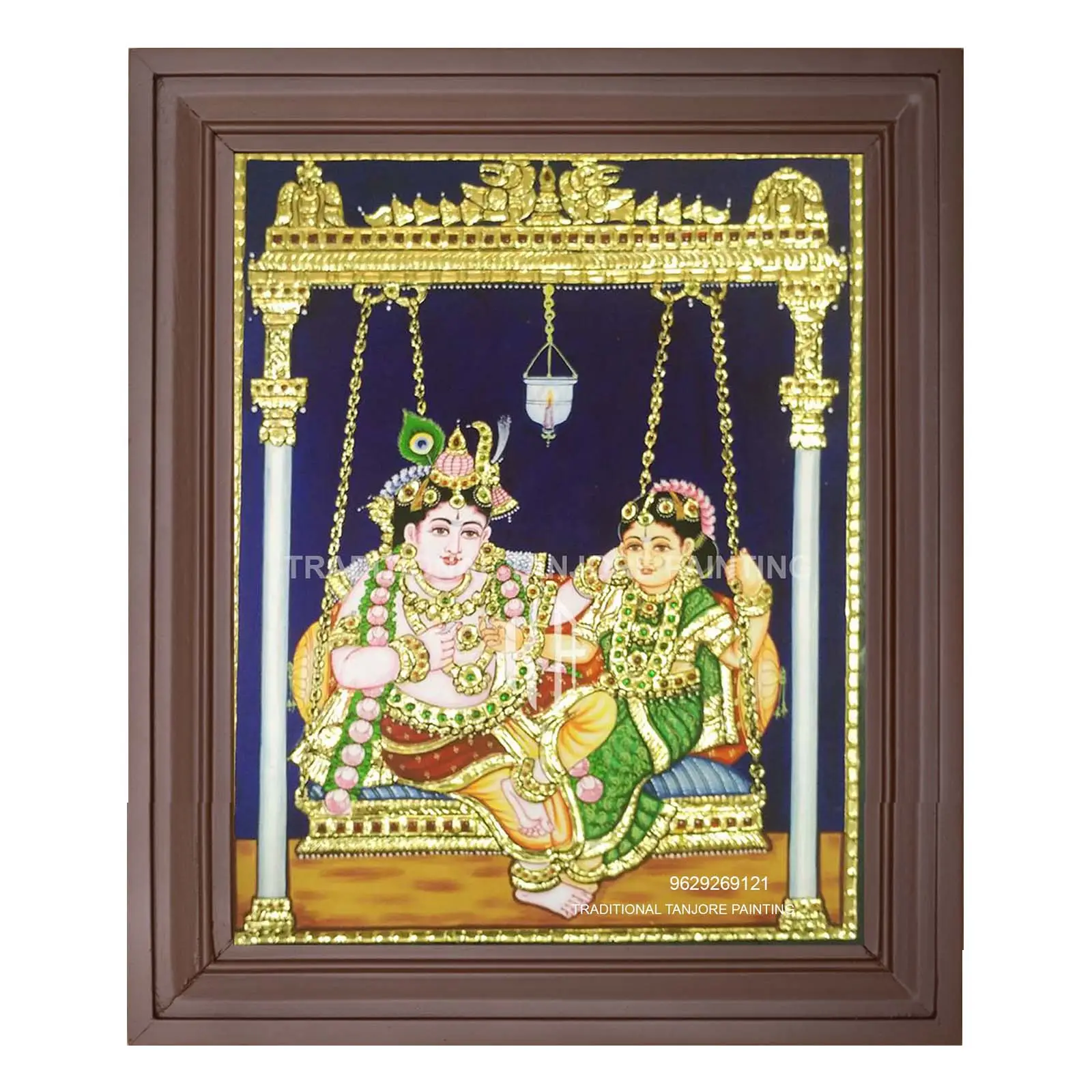
Tanjore painting, is one of the most exquisite traditional art forms of South India. Its uniqueness lies in the use of rich colors, 22-carat gold foil, and embedded gems and stones that give the painting a divine, three-dimensional appeal. These gems not only add beauty but also reflect cultural symbolism, making the artwork timeless.
Below are the main types of gems used in Tanjore paintings along with their specifications:
Kundan Stones :
Description: Glass-based stones that resemble precious gems like rubies and emeralds.
Colors: Red, green, blue, and white.
Specification: Flat-backed stones, lightweight, and easy to fix on wood panels.
Use in Tanjore Painting: Embellishing ornaments, crowns, and jewelry of deities.
Effect: Creates a sparkling jewel-like effect, enhancing grandeur.
Jaipur Gems :
Description: Glass-colored stones manufactured in Jaipur, known as India’s gemstone hub.
Colors: Red, green, blue, white, and yellow.
Specification: Available in multiple shapes (round, oval, teardrop) and cut to mimic real gems.
Use in Tanjore Painting: Used in divine crowns, borders, and attire decorations.
Effect: Affordable, vibrant, and highly reflective against gold foil.
Polki Stones :
Description: Uncut diamond-like stones or their imitations crafted for paintings.
Colors: Transparent white (imitating diamonds).
Specification: Rough-finished, flat-backed, resembling antique diamonds.
Use in Tanjore Painting: Embedded in crowns and divine ornaments.
Effect: Adds brilliance and an antique royal charm.
Glass Stones :
Description: Colored glass pieces shaped into stone-like embellishments.
Colors: Bright shades of red, green, blue, pink, and white.
Specification: Affordable, easily available, cut in standard sizes.
Use in Tanjore Painting: Popular for jewelry, borders, and intricate details.
Effect: Creates a vibrant, colorful appeal.
Semi-Precious Stones :
Description: Real semi-precious gems like garnet, onyx, or synthetic sapphire used in premium works.
Colors: Deep red, green, blue, black, and yellow.
Specification: Harder, heavier, and more durable than artificial stones.
Use in Tanjore Painting: Custom or luxury Tanjore paintings for collectors.
Effect: Adds authenticity, durability, and higher value to the artwork.
White Stones / Mirror Stones :
Description: White reflective beads or stones imitating the sparkle of diamonds.
Colors: Transparent or mirror-like white.
Specification: Highly polished, faceted surfaces for maximum shine.
Use in Tanjore Painting: Earrings, necklaces, and decorative highlights.
Effect: Reflects light beautifully, making the painting look radiant.
Conclusion :
The gems used in Tanjore paintings are not just decorative—they are integral to the art form’s identity. From Kundan stones and Jaipur gems to semi-precious stones and Polki, each type has its own specification, purpose, and effect. These gems, when combined with gold foil and intricate artistry, give Tanjore paintings their divine brilliance and cultural richness.